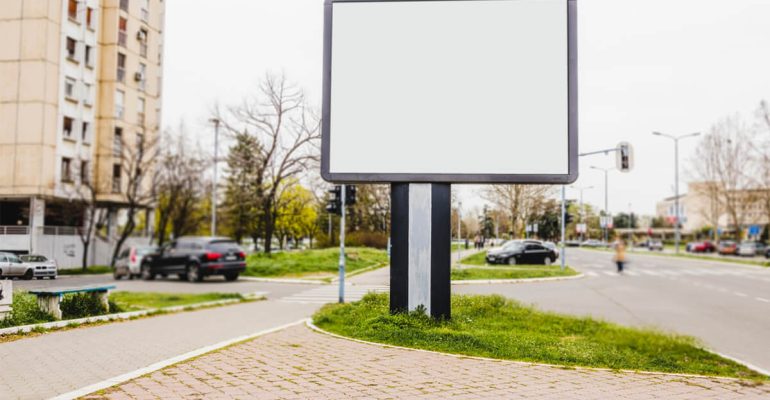
The past few decades have seen incredible changes in the way advertising is delivered. From billboards to digital screens, there are many ways to reach consumers, but some still stand out. One of these is out-of-home advertising—or OOH for short—which has been around since the early 1900s and has adapted with each new technological development.
Out-of-home advertising has become an important part of our lives, whether it’s on buses, trains, or even at our local fast-food joints! From where do people look when they’re considering purchasing something? Which types of products are purchased more often from billboards than from other places? What kind of messages can be effectively conveyed using this medium? All of these issues and more will be covered in this post!
Table of Contents
How out-of-home advertising began?
The first OOH ad was a poster. It was a political ad for Abraham Lincoln and ran in New York City in 1866, which was the year before he became president. The poster was designed to promote his candidacy and raise awareness of his campaign by using images of people who would benefit from his policies: farmers, soldiers fighting in the Civil War, and mothers caring for sick children at home while their husbands were away fighting.
In this example you can see how important it is to keep track of what has happened before you start working on something new; if we hadn’t known about these early examples, we wouldn’t have even thought about creating our version today!
The main formats of out-of-home advertising
The main formats of out-of-home advertising are billboards and transit.
Billboards are the most traditional form of outdoor advertising in terms of their history, heritage, and value proposition to clients.
This format has been around since the mid-1800s when it was first used as an effective way for advertisers to reach consumers who were traveling along city streets or highways. It’s also one that can be found throughout many countries around the world today: there are over 7 million billboards in North America alone!
In addition to being a great way for businesses to generate awareness amongst their target audience(s), billboards help create brand recognition through word-of-mouth referrals from satisfied customers who have seen them during their travels through various neighborhoods/areas within cities like New York City or London where they live (or at least visit frequently).
Because these types of ads tend not only to draw attention but also maintain curiosity about what lies beyond them—what kind would you say people look forward to seeing? —they’re still widely used despite technological advances making it easier than ever before for brands like Coca-Cola Company Incorporated (NYSE: KO)
Who looks at out-of-home advertising?
Out-of-home advertising can be viewed by anyone walking down the street, sitting in their car or on a bus, or even watching TV. This makes it one of the most cost-effective ways to reach your target audience.
OOH, ads are also effective because they allow you to target specific demographics and locations with your message. For example, if you want to maximize sales among young families in Atlanta who live near Children’s Healthcare of Atlanta hospitals but don’t have children themselves yet but would like them someday (or already have them), then OOH might be an ideal platform for getting that message out there!
Effective OOH ads
The ideal OOH ad is creative, memorable, and relevant to the target audience. It should also be well-designed.
Creative elements can include a headline or subheadline; an image or a mix of images; text that sets up the offer in short sentences (or even just one word); call-to-action buttons or links; social media sharing buttons; and possibly more.
Memorable elements include an attention-grabbing design elements such as shape, color scheme/hue/palette or combination thereof along with some other small details like fonts used in body copy, etc., which may not seem important at first glance but end up making all the difference later on when people see them repeatedly over time while they pass by each ad unit every day
The future of OOH
The future of OOH advertising is bright, and it will be shaped by new technology.
The first change you’ll see is that OOH will become more interactive. For example, advertisers can use software to create personalized ads for each customer who views their ad or gets in touch with them after seeing an ad on TV or online.
This allows for more targeted marketing than ever before, which means less wasted money on ads that don’t reach the right people (or worse: no one at all).
Another way we’re going to get better at targeting our audiences is through mobile devices—specifically smartphones and tablets—which are becoming common household items among consumers today!
This means we can reach even more consumers while they’re out doing their daily routines; they’re not just using tablets when they have time off work but also while commuting home from work every day too!!
OOH will continue to adapt to new technology
Out-of-home advertising, or OOH, has a long history. It’s been around since the 1950s and continues to adapt to new technology. In fact, out of home has become one of the best ways for advertisers to reach consumers in today’s digital age.
Out-of-home advertising has a long history dating back hundreds of years!
Did you know that the first billboard was built by Thomas Crapper?! He was an advertising pioneer who revolutionized the way companies promoted their products.
He was given the nickname for his inventive and imaginative billboard designs! “Mr. Billboards” and they were a major success during his lifetime. His clever and eye-catching designs made them an overnight success, and he is still remembered as one of the great innovators in the field of advertising.
There are some relics from this era that can still be seen today, such as billboards with advertisements written in chalk or paint pens. These are called “painted signs” or simply “chalkboards” because they are mostly made of chalkboard material rather than paper, which means that any ink that may have accumulated over time due to weather conditions outside where these particular types were placed will not be left behind when you wipe away any moisture.
Conclusion
OOH advertising is a great way to reach your customers, but there are some considerations that you should keep in mind.
The first is that the best ads get seen by as many people as possible, so it’s essential that you use creative designs and engaging copy along with quality location data.
The second is to make sure that any ad campaign you’re running includes mobile devices in addition to PCs/Macs or tablets like iPads or Android tablets (or whatever other device your audience may be using).
Lastly, remember that the success of any campaign depends on having an effective marketing strategy in place beforehand—so think about what makes sense for your business before jumping into the fray!
At Jasmin Marketing, we offer free guides and tutorials related to digital marketing. We aim to make knowledge accessible to all! Everyone needs to know about digital marketing, how to promote their business and personal brands, and where exactly to do so.